Contractor Pollution Liability for Natural Gas Contractors: Why GL Isn't Enough
By NG Insurance Online
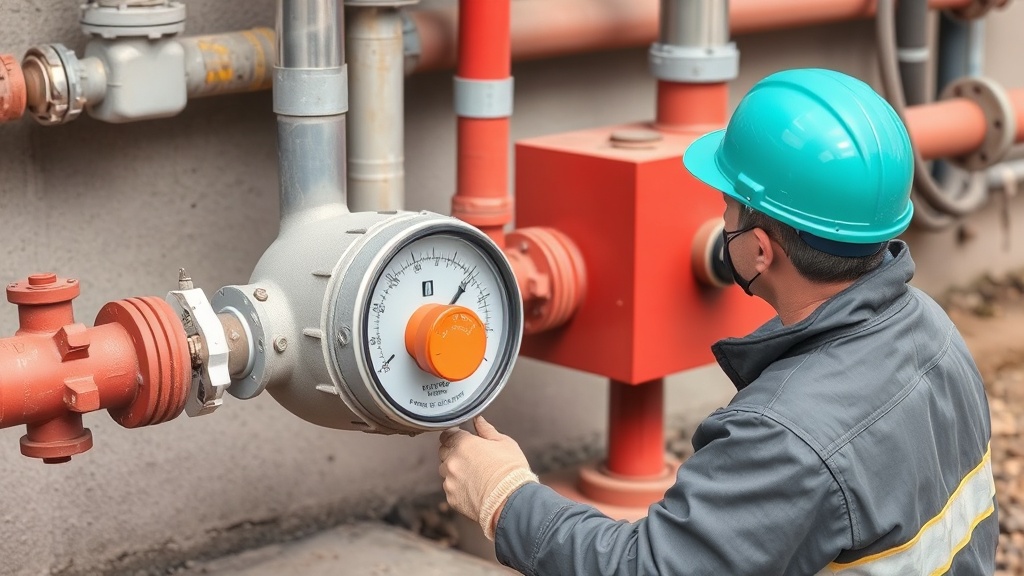
Natural gas contractors face a coverage gap that catches many businesses off guard: their General Liability (GL) policy will deny most claims arising from a gas migration event, indoor accumulation incident, or underground release.
The reason is the pollution exclusion — a standard provision in virtually every commercial GL policy that excludes bodily injury and property damage caused by the discharge, dispersal, release, or escape of pollutants. Natural gas — including methane and other hydrocarbons — typically qualifies as a "pollutant" under these exclusions.
What CPL Covers That GL Doesn't
Contractor Pollution Liability (CPL) is designed to fill this gap. A properly structured CPL policy for natural gas contractors covers:
- Third-party bodily injury caused by a gas migration event your operations triggered
- Property damage from pollution conditions, including structure damage from gas accumulation
- Cleanup and remediation costs for underground release events
- Indoor accumulation incidents from service line installation or appliance hookups
- Emergency response costs when first responders are called to a gas event
- Legal defense costs — which alone can run into six figures on a serious claim
Real-World Scenarios Where CPL Responds
Scenario 1: Gas Migration to Adjacent Property
A gas service contractor installs a new service line. A year later, a neighboring homeowner calls the fire department reporting a gas smell. Investigation reveals gas has migrated from a fitting at the original installation site. The homeowner and two family members are treated for headaches and nausea.
GL response: Likely denied under the pollution exclusion. CPL response: Bodily injury claim covered. Cleanup costs covered.
Scenario 2: Indoor Accumulation During Appliance Hookup
A gas appliance installer completes a furnace hookup. The next morning, the homeowner discovers elevated carbon monoxide levels. An investigation traces the cause to an improper connection from the prior day's work.
GL response: Claim contested — many carriers argue CO exposure is a pollution condition. CPL response: Covered under indoor accumulation provisions.
Scenario 3: Service Line Leak Discovery Post-Completion
A gas distribution contractor pressure-tests a new service line, clears the job, and closes out. Three months later, a slow leak from a pinhole in the line creates an underground gas pocket that ignites.
GL response: Completed operations coverage may respond, but the pollution exclusion likely triggers. CPL response: Completed operations CPL covers this scenario explicitly.
Claims-Made vs. Occurrence: A Critical Distinction
Most CPL policies are written on a claims-made basis — meaning the policy in effect when the claim is reported covers the loss, not the policy in effect when the pollution event occurred.
This has a major practical implication: if you cancel your CPL policy, you lose coverage for any prior events that haven't been reported yet. Gas migration events can remain latent for years before discovery.
We strongly recommend:
- Maintaining continuous CPL coverage without gaps
- Purchasing an extended reporting period (tail) if you ever cancel or switch carriers
- Matching retroactive dates when switching carriers to avoid coverage holes
Who Needs CPL
Every natural gas contractor should carry CPL, including:
- Gas service contractors installing or repairing service lines
- Gas distribution system contractors
- Intrastate pipeline contractors
- Appliance hookup technicians and plumber-gas hybrid contractors
- Gas meter set and restoration crews
- Gas gathering system contractors
Even contractors whose scope is limited to appliance hookups or service line repair are exposed to indoor accumulation and completed operations scenarios that CPL is designed to cover.
What CPL Costs
CPL premiums for natural gas contractors vary based on:
- Annual revenue
- Scope of gas work (service lines vs. distribution mains vs. intrastate pipeline)
- States of operation
- Loss history (prior claims)
For most small-to-mid-size gas service contractors, CPL can be obtained in the range of $1,500–$5,000 annually — a small fraction of the potential exposure from a single claim.
Contractors with prior pollution claims may pay more and may need to access E&S surplus lines markets, but coverage is typically still available.
Getting Quoted
When applying for CPL coverage, be prepared to provide:
- A full description of your scope of gas contractor work
- Annual revenue from gas operations
- States where you perform gas work
- 5-year loss history including prior pollution claims
- Copy of your GL policy (carriers want to coordinate the two policies)
- Safety program documentation
At NG Insurance Online, we specialize in placing CPL for natural gas contractors of all sizes — from solo service technicians to multi-state pipeline contractors. Most quotes are returned within 15 minutes.
NG Insurance Online is a specialty division of Contractors Choice Agency. We write natural gas contractor insurance in all 50 states. Call (844) 967-5247 or request a quote online.
Need this coverage for your natural gas operation?
Get a real quote in about 15 minutes — we shop A-rated specialty energy contractor markets.